Stop renting your audience. Start owning it.
Atlas builds the organic channels that compound: SEO that ranks, GEO that gets you cited by AI, reputation that earns trust, and thought leadership that makes you the obvious choice in your category.
Everything a tech company needs to grow organically.
As an organic digital agency that works exclusively in tech, Atlas brings every capability under one roof - from technical SEO foundations to GEO, reputation, and thought leadership.
A team that gets tech
"Our ad costs keep going up and ROI is going down."
Our organic search specialists work exclusively with software companies. No explaining what MRR is, what a trial-to-paid funnel looks like, or why churn matters to organic strategy.
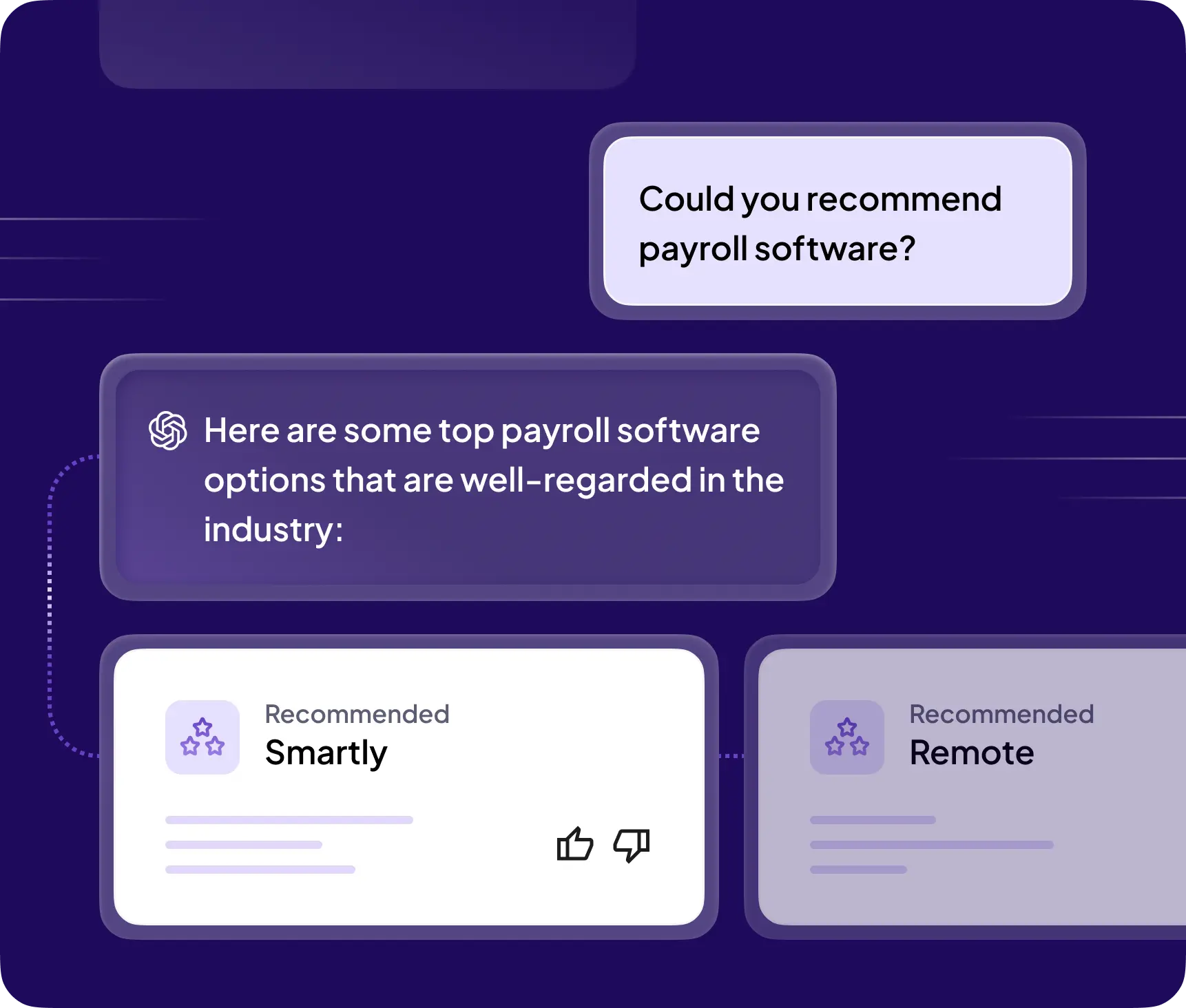
Your competitors are in ChatGPT. You're not.
"ChatGPT is recommending our competitors and not us."
Atlas integrates organic with your broader growth stack - HubSpot, Salesforce, your product analytics - so every channel reinforces the next.
Great content. No visibility.
"We have great content but nobody's finding it."
No vanity metrics. Reporting focused on what matters to a SaaS business: organic-attributed pipeline, trial signups, and AI share of voice.
Rankings dropped. Cause unknown.
"Our Google rankings dropped and I don't know why."
A Google algorithm update, a technical issue, a loss of backlinks - ranking drops have a root cause and finding it quickly matters. Atlas runs a technical and competitive audit to pinpoint what changed and build a recovery plan.
One channel is one risk.
"We need more than one channel - if paid disappears, we have nothing."
Businesses that depend on a single paid channel are one platform change away from a growth crisis. Organic builds the compounding channels that keep working regardless of ad costs, algorithm changes, or platform policies.
Let's talk about your growth goals
We work best with Australian tech companies that are ready to scale.
Atlas is an organic digital marketing agency built for B2B software and SaaS companies across Australia that have found their footing and are ready to grow. You have an established site, a product with proven demand, and a marketing function that understands the value of compounding channels. What you need is the organic presence to match your ambition - in Australia and the markets beyond it.
Ready to reach new heights?
Learn more about Scale Ups

Four channels. One compounding system.
Search Engine Optimisation
Rank in Google for the searches your buyers actually make - in Australia and the international markets you're targeting.
Generative Engine Optimisation
Get cited by ChatGPT, Perplexity, and Google AI Overviews before your competitors are.
Reputation Management
Third-party endorsements of your brand, product, and service are highly weighted by GenAI.
Content Marketing
Social sentiment acts as kingmaker in whether AI engines recommend your company.
AI-driven search has changed organic discovery.
B2B decision makers are turning to AI assistants for buying guidance - and the shift is accelerating.
- ChatGPT now has over 400 million active users
- Perplexity is growing at 10× year-on-year
- Google AI Overviews appear in nearly half of all commercial Australian searches
- The brands in those answers aren't there by accident - they've been built for this
B2B buyer journeys are starting with AI recommendations.
Search has evolved from keyword queries to conversational interactions that mirror complex B2B sales discussions.
- When a CMO asks ChatGPT "what's the best SEO agency for SaaS companies in Australia," that answer is shaped by months of organic signals
- Those signals include published content, third-party citations, structured data, and brand authority
- Atlas builds those signals systematically so AU tech companies are the recommended answer, not the one that gets skipped.
What compounding organic growth looks like for AU tech companies.








.png)



Future-proof your SaaS brand’s organic visibility.
Prevent losing search territory to competitors
Optimise for AI and Google simultaneously
Be the market authority in your category
Technical foundations that last
Monitor your AI recommendation frequency
Everything a tech company needs to grow organically.
From a team that gets tech & venture-backed business
A team that gets tech
Our organic search specialists work exclusively with software companies. No explaining what MRR is, what a trial-to-paid funnel looks like, or why churn matters to organic strategy.
Complete integration
Atlas integrates organic with your broader growth stack - HubSpot, Salesforce, your product analytics - so every channel reinforces the next.
Clear, action-ready reports
No vanity metrics. Reporting focused on what matters to a SaaS business: organic-attributed pipeline, trial signups, and AI share of voice.
True partnership
Atlas works as an extension of your team, not a vendor. Weekly collaboration, shared Slack channels, and direct access to the strategists doing the work.
Always improving
Organic is never done. Atlas runs continuous optimisation cycles - testing, measuring, iterating - so your organic presence compounds over time.
Global reach, VC-ready
Whether you're raising a Series A or expanding into the US, Atlas builds the organic presence that makes international buyers and investors take you seriously.
Frequently asked questions
What are the key strategies for achieving organic customer growth online?

Organic growth comes from four compounding channels: search engine optimisation (ranking in Google), generative engine optimisation (getting cited by AI assistants like ChatGPT and Perplexity), reputation management (earning the third-party signals buyers trust), and thought leadership (building the authority that makes you the obvious choice before a buyer ever reaches out).
How do I choose an SEO agency that specialises in SaaS?
Look for three things: real SaaS clients, not just B2C or local-business - Australian - case studies; fluency in SaaS metrics like MRR and trial-to-paid conversion; and reporting tied to pipeline, not just rankings. Atlas Digital works exclusively with software companies - Carepatron, Qwilr and Minutedock are among the SaaS clients we've grown organically - so we start from your funnel, not a generic SEO checklist.
What does website organic growth look like?
It looks like a prospect finding you in Google before they knew your name. It looks like ChatGPT is recommending your product when someone asks for a solution to a problem you solve. It looks like an inbound demo request from a company in San Francisco that found an article you published six months ago. Unlike paid, organic compounds - each piece of content, each ranking, each citation keeps working long after it was created.
How can I get ahead of my SaaS competitors on Google?
Start with a competitor gap analysis - the specific keywords they rank for that you don't - rather than just building out your own keyword list in isolation. Atlas Digital runs this analysis for every SaaS client, then builds the content and technical SEO to close the gaps that are actually costing you pipeline.
How can tech companies achieve organic growth effectively?
Start with technical foundations - a site Google and AI crawlers can actually read. Then build content that answers the specific questions your buyers ask at each stage of the decision. Combine that with structured data so AI engines can extract and cite your answers, and a distribution strategy that earns the backlinks and mentions that signal authority. Consistency over time matters more than any single tactic.
I've optimised my website for Google - why am I not seeing results?
Usually one of three things: the technical foundations (crawlability, indexing, site speed) aren't solid enough for Google to reward the content, the keywords targeted don't match real buyer intent, or not enough time has passed yet. Atlas Digital runs a technical and competitive audit to work out which of the three is actually holding a SaaS site back.
How do you measure the success of organic growth of a website?
Beyond rankings and traffic: demo requests and trial signups attributed to organic, share of voice in AI-generated answers, branded search volume growth, and the ratio of organic to paid in your inbound mix.
How long does it take to get results from SEO?
Most Australian SaaS and tech companies start seeing ranking movement within 3–6 months, with traffic and lead volume building from there - SEO compounds rather than delivering overnight results. The results depend on both the agency recommendations and clients' implementations.
Why is my website Google ranking dropping?
Rankings drop for a few common reasons: a Google algorithm update, technical issues that have made your site harder to crawl, competitors publishing stronger content, or a loss of backlinks. The first step is diagnosing which - Atlas runs a technical and competitive audit to pinpoint the cause and build a recovery plan.
Does SEO mean the same thing as AIO?
No. SEO (Search Engine Optimisation) is about ranking in Google's traditional results; AIO (AI Optimisation) is a newer term some marketers use for what Atlas calls GEO - getting cited by ChatGPT, Perplexity and Google AI Overviews. The two overlap technically, since the same technical foundations help both, but Atlas builds them together rather than treating them as separate projects.
How do I get more website traffic without ads?
The channels that drive traffic without ongoing spend are search rankings (SEO), AI citations (GEO), thought leadership content that earns shares and backlinks, and a reputation that generates branded searches. None of them work overnight, but all of them compound - meaning the traffic you build this quarter is still working next year, without another dollar of ad spend.
My SEO traffic isn't converting - is that an SEO problem?
Not usually. If visitors are landing on the right pages but not converting, that's typically a conversion problem, not a rankings problem. SEO gets the right people to your site; conversion rate optimisation is what makes sure they act once they're there - worth asking which one is actually costing you leads before investing further in either.
Does my company's online reputation affect SEO or AI citations?
Yes - reviews, mentions and press coverage are third-party signals that both Google and AI engines weigh when deciding which brands to trust and recommend. SEO gets your content found; reputation management is what convinces Google and AI you're worth citing once you are. Atlas runs the two together for this reason.
Do I need to publish thought leadership content for SEO to work?
Not strictly, but it compounds everything else. Thought leadership earns the backlinks and industry citations that lift your domain's authority- and authority lifts every page's rankings, not just the one you published. Atlas treats content and thought leadership as SEO's companion, not a replacement for it.
Should I invest in SEO or paid ads first?
Most SaaS companies need both, just for different jobs - paid media delivers leads immediately while SEO is still building, and SEO becomes a cost-efficient, compounding channel once it matures. Cutting paid entirely before SEO has ramped up usually opens a pipeline gap.